EXHIBITION OF THE AUTHORITY VEDRANE PEČEK
Chimpanzees
This exhibition is an homage to intangible cultural heritage, but also a bold step forward in contemporary design – a blend of tradition, experiment and sustainability.
Through this project, the author tells the story of joint work, memories and knowledge that is slowly disappearing, and it is worth preserving and transmitting.
The exhibition is open from 22 August to 22 September 2025.
About work
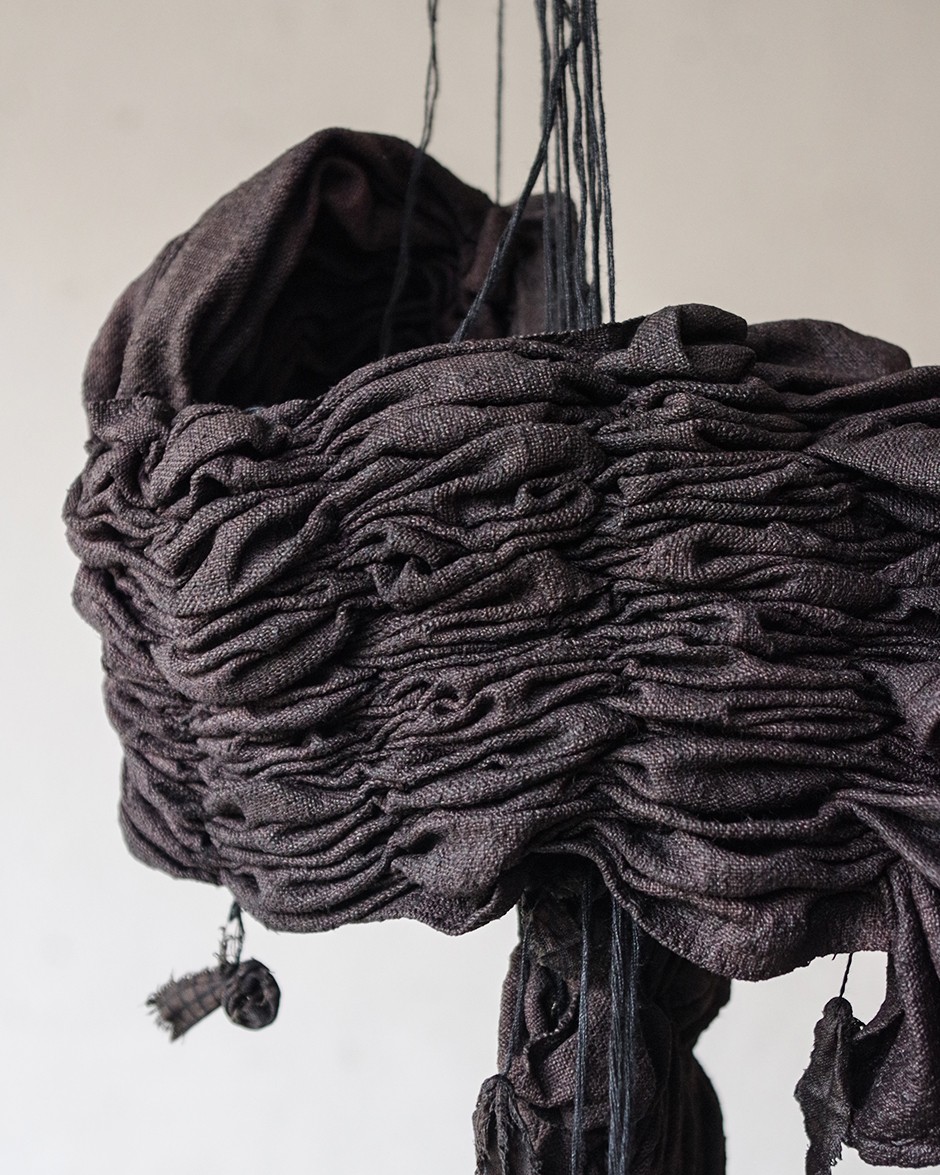
Ščipanka is the name for a garment made of a multitude of hand-formed faldica. They were carried underneath. oplek i fertuna. In order to preserve their shape after washing, the chimneys are rolls in a specific way. They would spread out on the table and then be used as troughs, butterflies (roller) and the weights returned, one by one, to their original form.
Dad remembers doing it with his grandmother all morning, she'd put him like a weight in the trough and roll him. These stories are easily forgotten, and with them the knowledge and skills needed to preserve our cultural heritage.
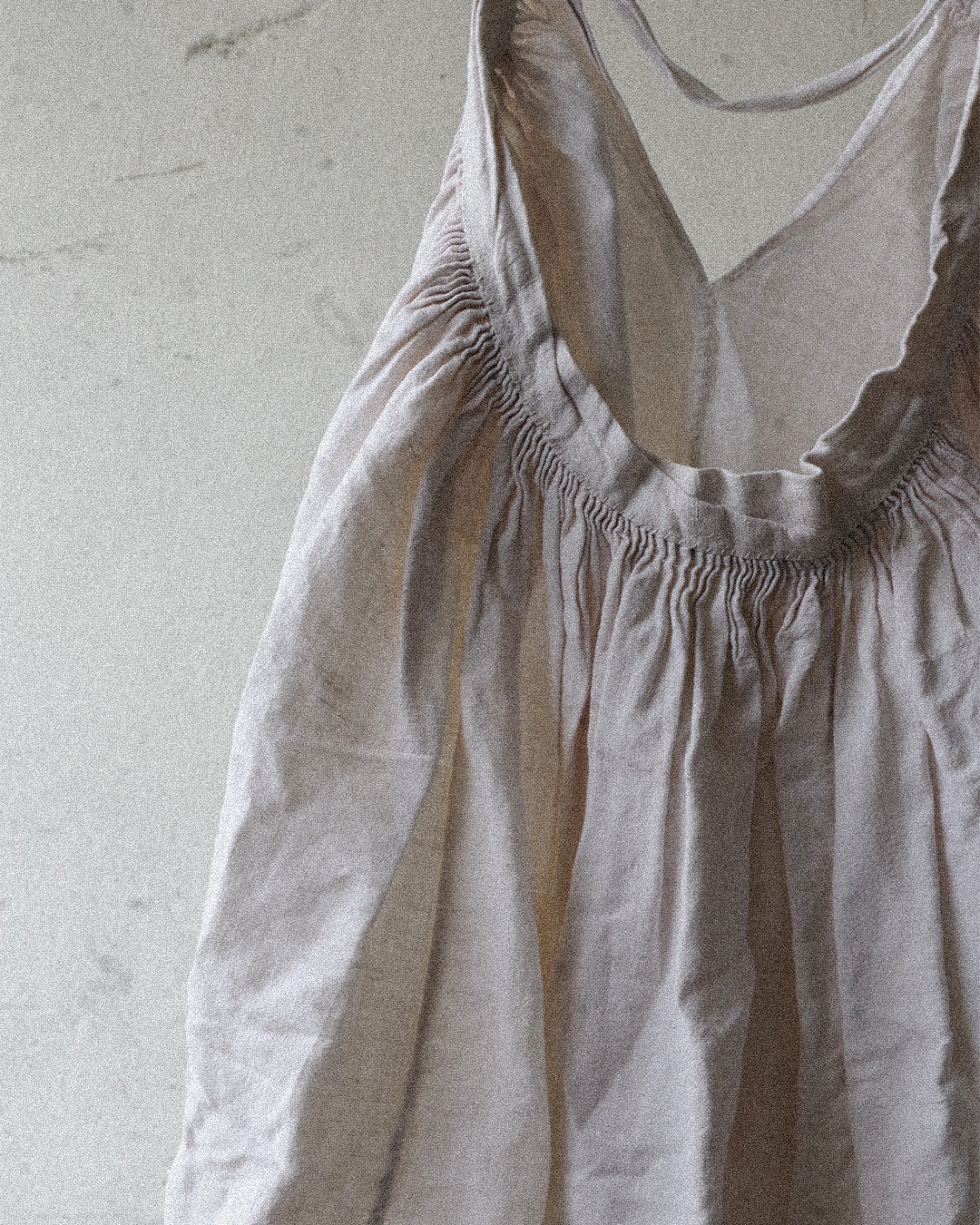
These contemporary Ščipankas tell this story, revitalize the forgotten craft coloring (transfer of dyes to the fabric), through a specific dyeing technique, Shibori.
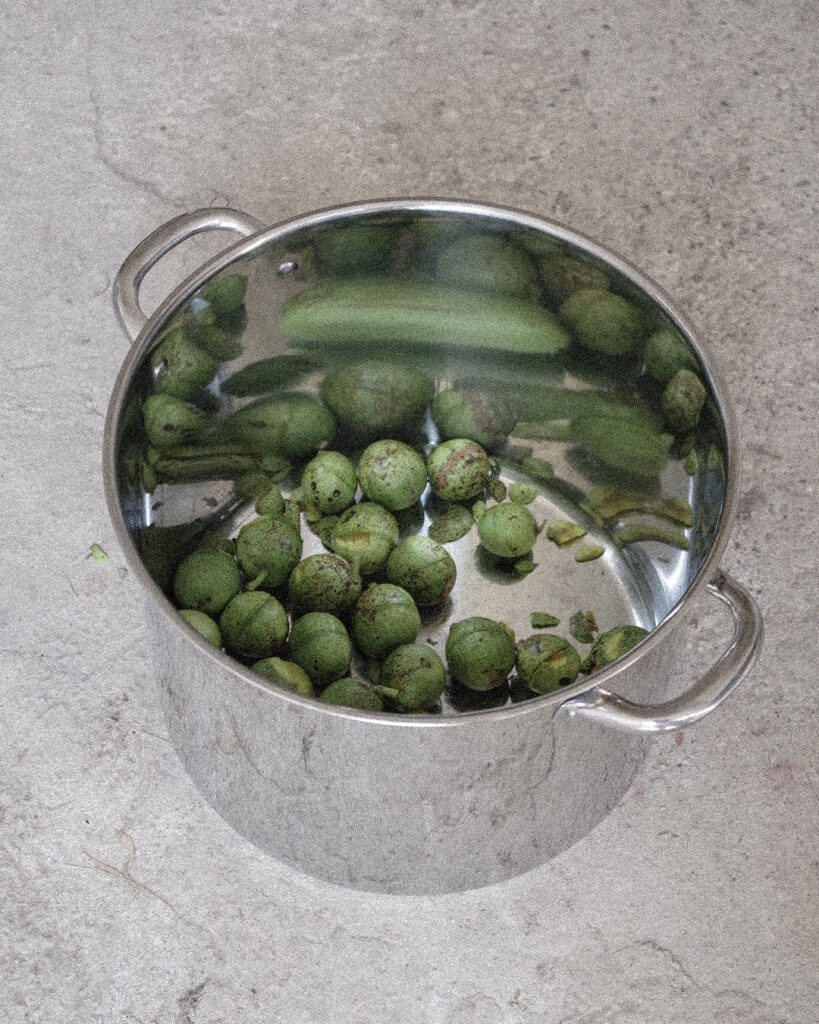
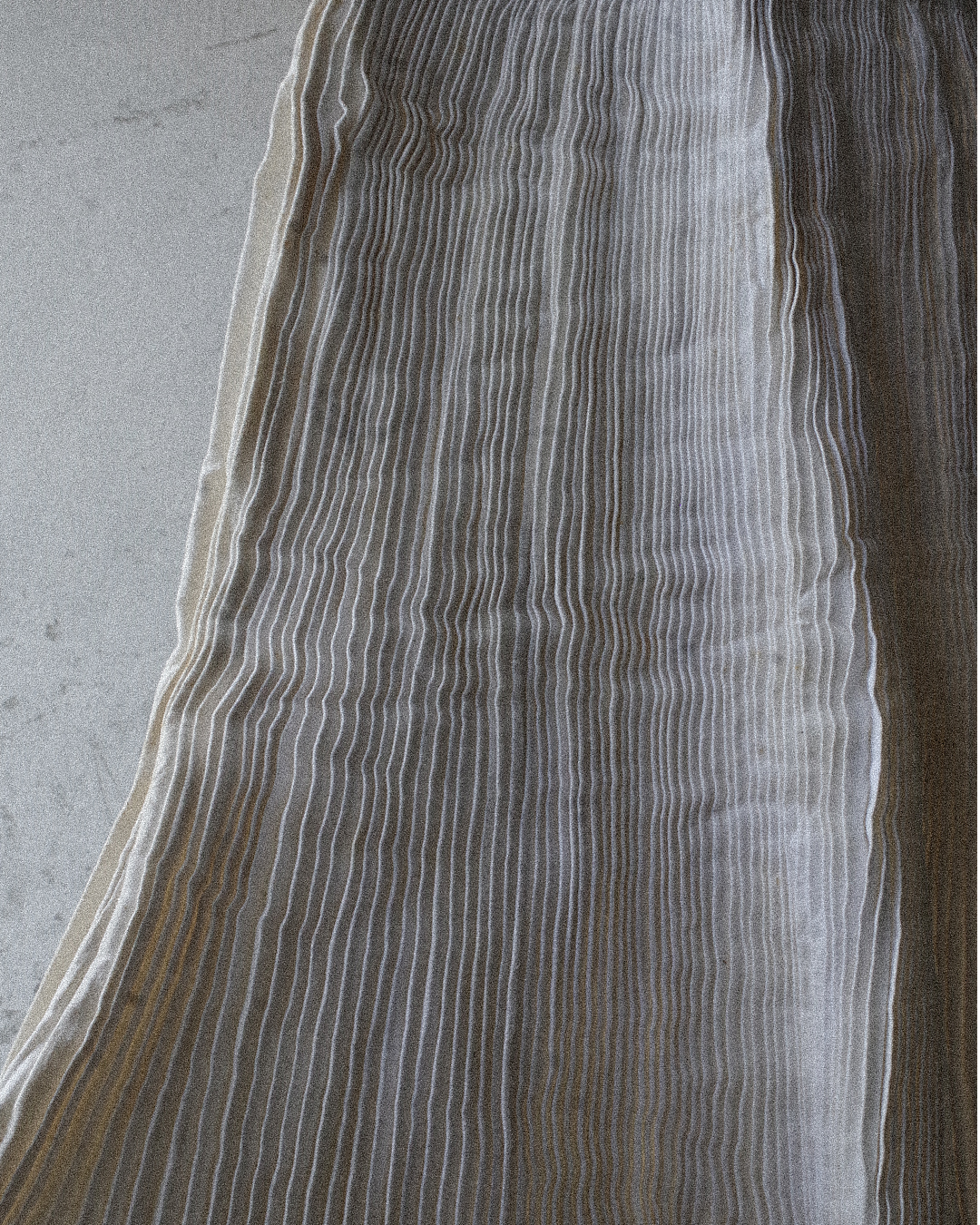
The final form of these densely compacted faldices, reminiscent of mokume shibori, where mokume means the bark of a tree. Symbolic data, considering that the waste bark of trees such as birch, willow iva and jacket (joha). Each of these little things unites the whole of the canvas more deeply.
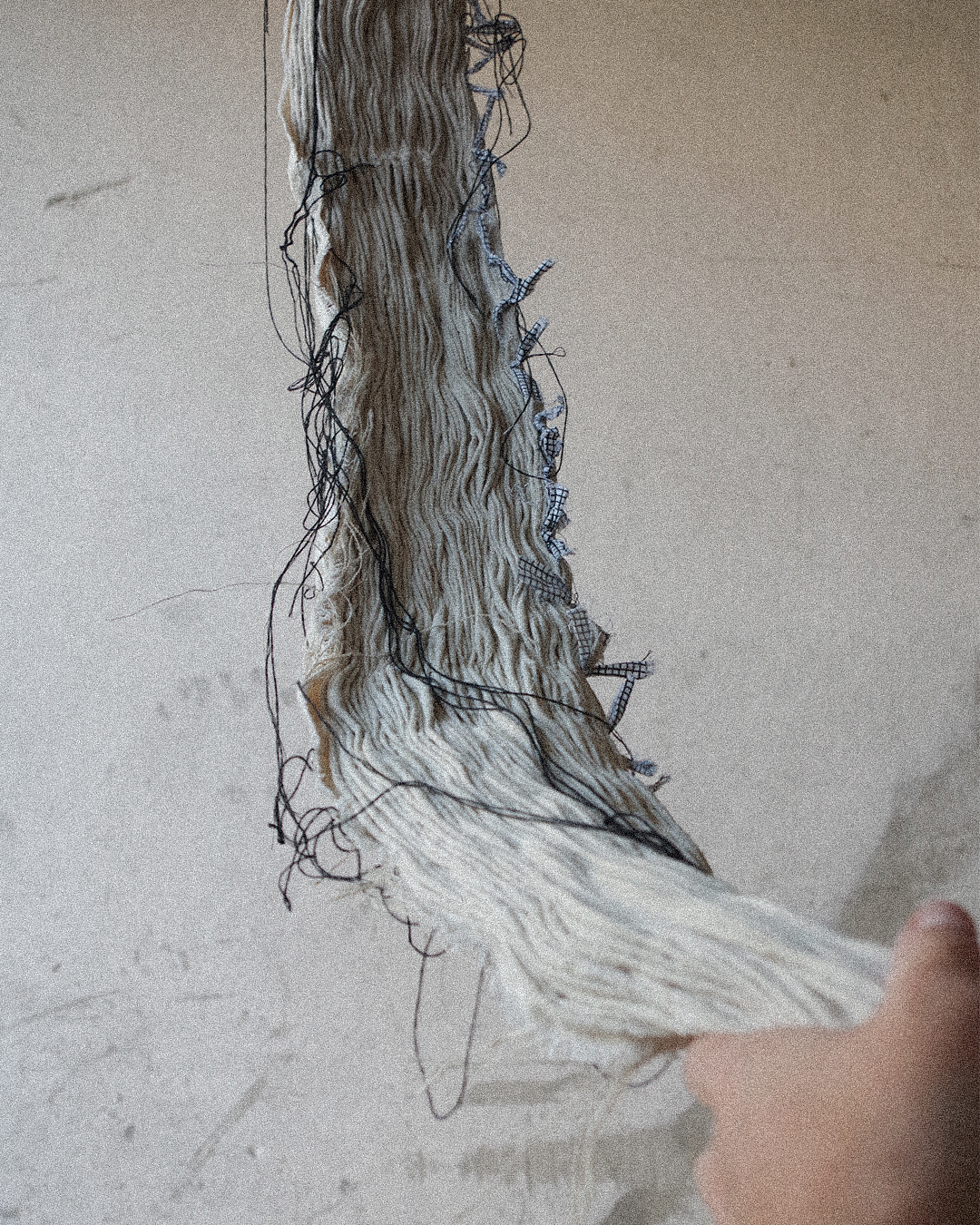
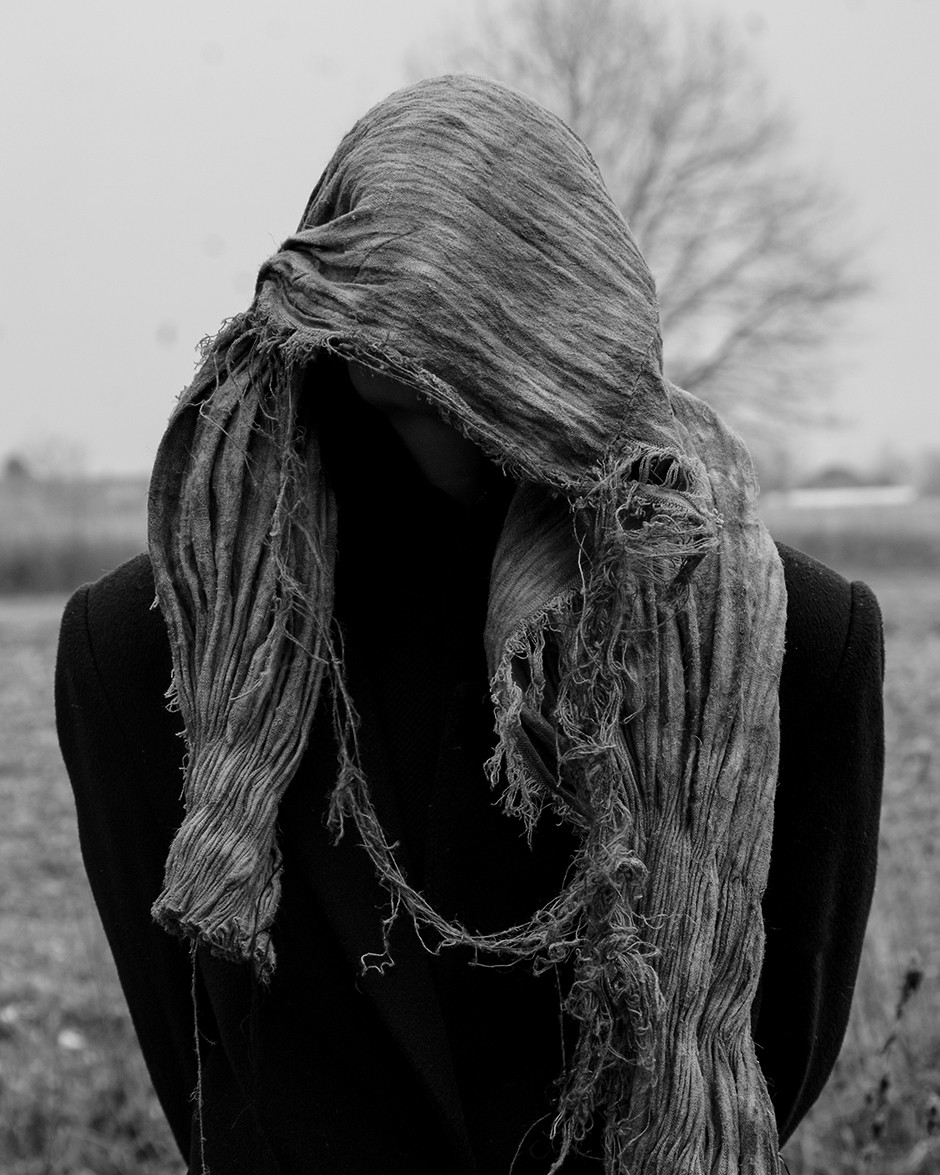
These canvases deconstruct the element of folk costume in their own way, and enlarge it to the full format of a sheet or pole. Name pole comes from the fact that it is half the width of the loom, approximately 90 cm. At the end of the connections and manually tightening the threads, Ščipanka is 15-20 cm wide.
Painting process consists of making a bath, which means the extraction of dyes from a selected plant source. The extraction process can take several hours or several days. During this time, canvases are prepared and processed, the dye is separated from the bath and the canvases can be immersed in the dye. After that comes the connection process where it is hand-picked line by line of canvas, then tightened with thread, thread by thread. The prepared canvas goes into a new dye or into the process of processing with a pH modifier to change its tone. After the canvas is rinsed and dried, each row of the link is squared and a mokume pattern is detected.
About the author
Vedrana Peček
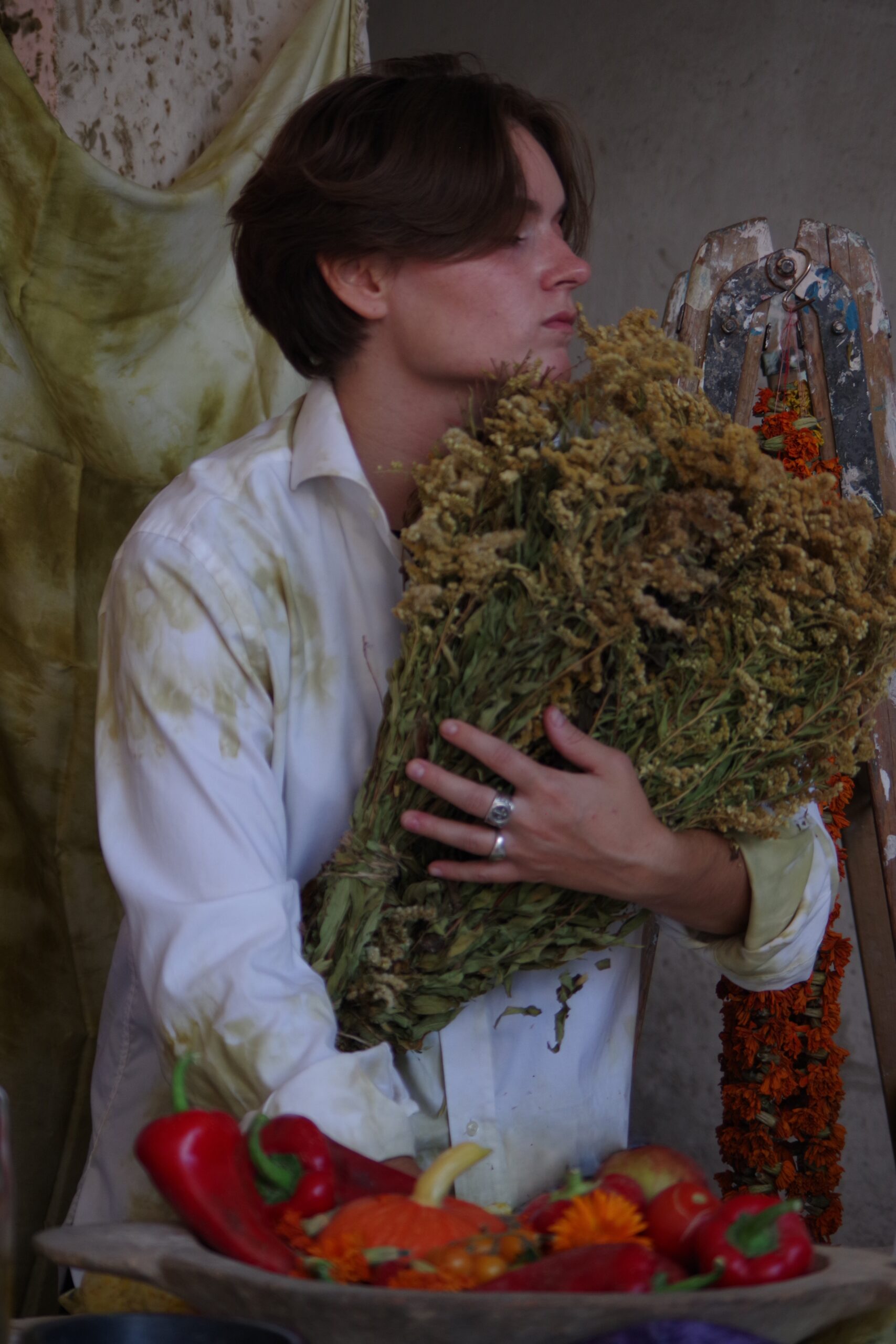
Vedrana Peček was born in Zagreb in 1997. After graduating from the School of Graphic Production and Design, she enrolled in the Faculty of Textile Technology in 2016, where she received her master's degree in textile technology and fashion design in 2023. In 2025, he became a member. HDLU i ULUPUH in the section for textile creation.
Through her artistic practice, Vedrana explores the blends of science and art, producing her own inks and pigments for illustrations. Through traditional techniques of textile manipulation and dyeing, it revitalizes forgotten crafts and manual work skills.
She has participated in numerous exhibitions and projects, among which they stand out Yes, yes! Festival In the course of which she had the opportunity to exhibit in the Museum of Contemporary Art i Zagreb Design Week, and manifestations such as the International Day of Colors u the Nikola Tesla Technical Museum.
Her engagement in the field of sustainability and innovative design also includes participation in various international seminars and trainings, such as: CEEPUS Design Week the Maribor i ICT-TEX Venice.
Actively organizes and runs coloring workshops, promoting the importance of ecological and sustainable production in the fashion industry.


 EN
EN  HR
HR  DE
DE  SL
SL